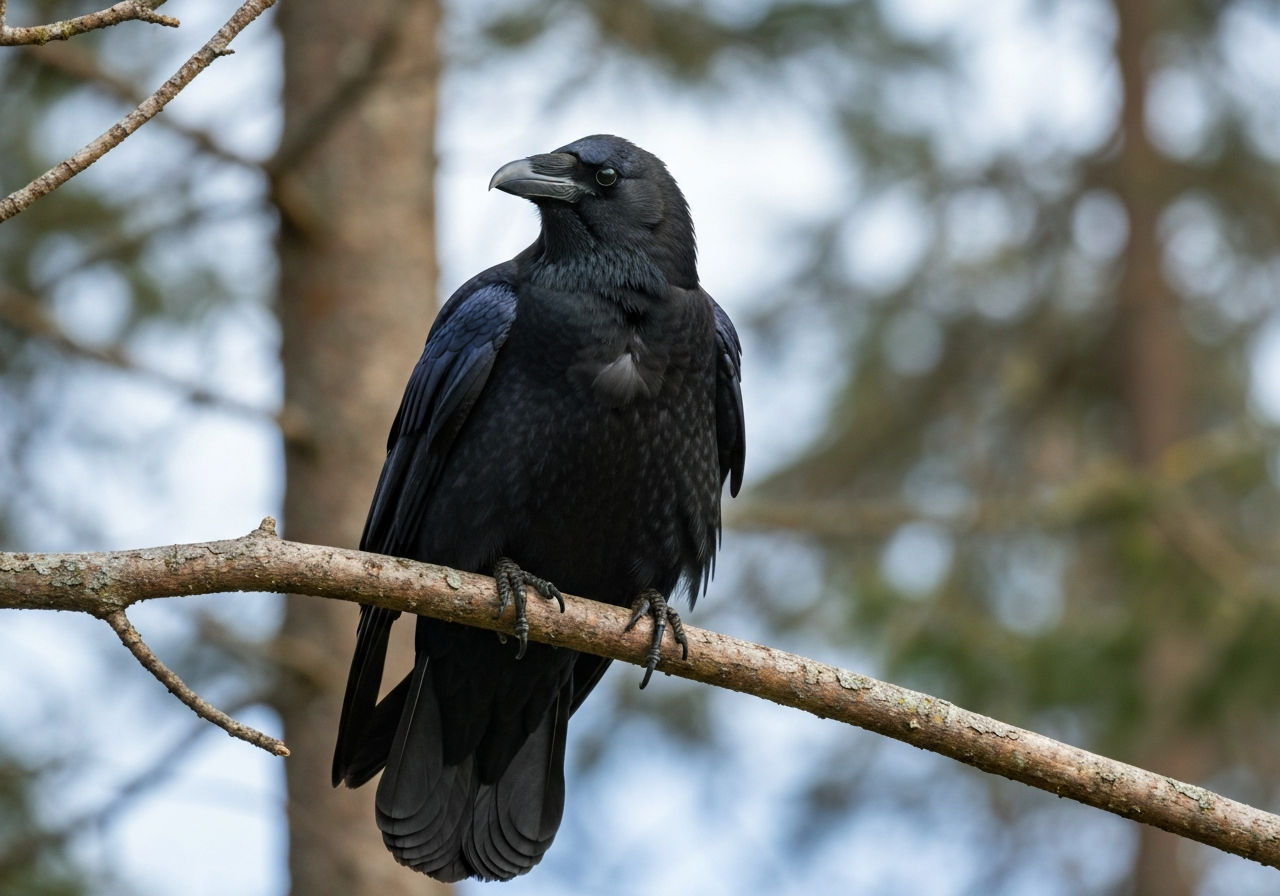
The dodo was a large, heavily built, flightless bird that stood roughly the size of a big turkey, with a round, bulky body, stubby useless wings, thick scaly legs, and one of the most distinctive beaks you could imagine on any bird. It went extinct in the late 17th century, so there are no photos, no videos, and no living specimens. What we know about its appearance comes from a handful of historical paintings, written accounts from sailors and explorers, and one genuinely remarkable preserved specimen at Oxford. But between all of that, we can piece together a pretty solid picture of what the dodo actually looked like.
What Did the Dodo Bird Look Like? Bird and Egg Details

Marcus Whitley
22 Mar 2026
The quick answer: what did the dodo look like overall?
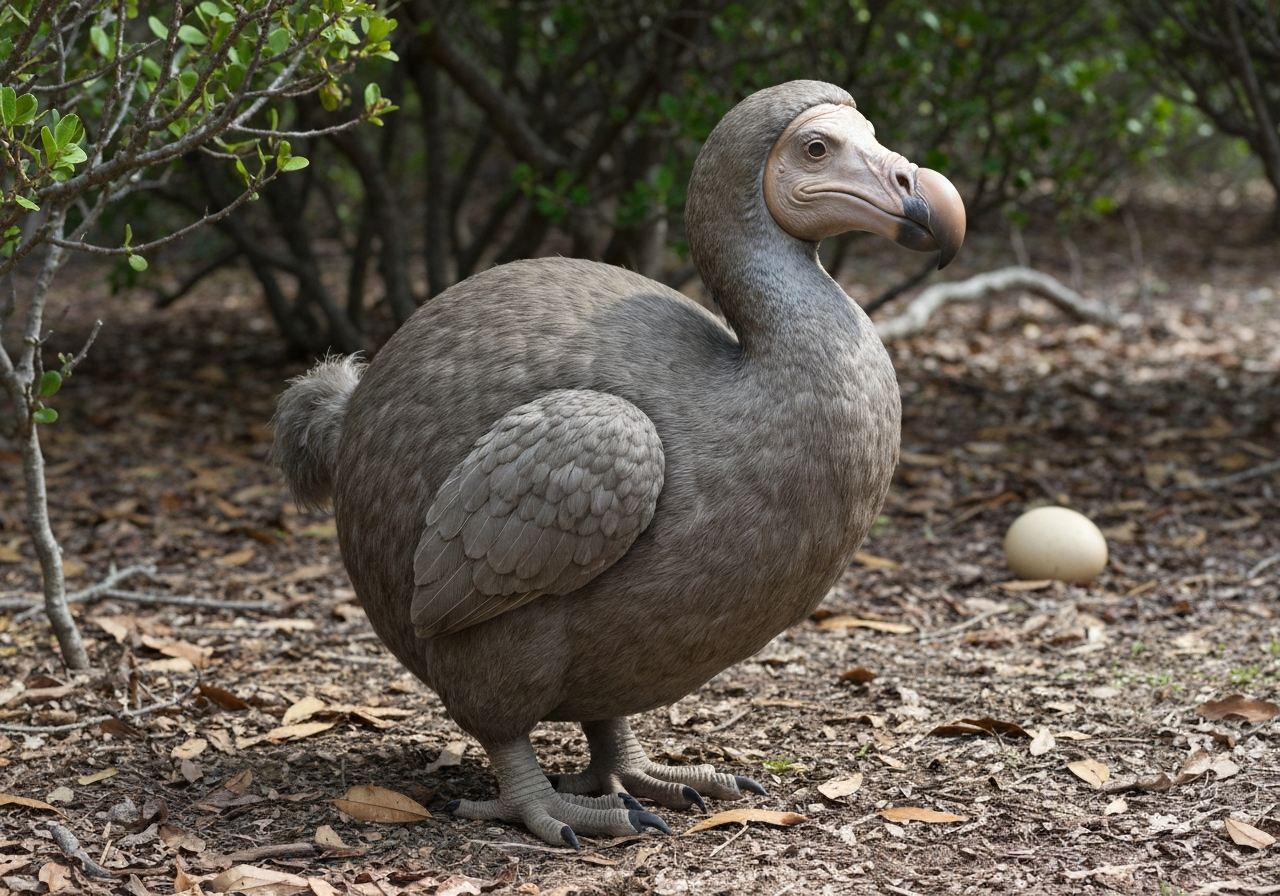
Picture a bird built like a bowling ball on legs. The dodo was stocky almost to the point of seeming comical, with a heavy, rounded body and a relatively small head perched on a thick neck. It stood maybe 3 feet tall and weighed somewhere in the range of 7.7 to 18.2 kg (roughly 17 to 40 lbs), with the best current estimates landing around 12.4 kg (about 27 lbs) for a wild bird. That puts it closer in mass to a large goose or a small swan than to a turkey, though it was shaped quite differently from either. Picture a bird built like a bowling ball on legs. The dodo was stocky almost to the point of seeming comical, with a heavy, rounded body and a relatively small head perched on a thick neck. It stood maybe 3 feet tall and weighed somewhere in the range of 7.7 to 18.2 kg (roughly 17 to 40 lbs), with the best current estimates landing around 12.4 kg (about 27 lbs) for a wild bird. That puts it closer in mass to a large goose or a small swan than to a turkey, though it was shaped quite differently from either. what bird looks like a dragon what bird looks like a dragon
Its plumage was predominantly gray or grayish-brown, with yellowish or lighter coloring on some of the smaller feathers around the chest and belly area. The tail was a small puff of curled whitish feathers, like a powder puff stuck to its backside. The wings were tiny and completely non-functional for flight, basically vestigial stubs. The overall impression was of a bird that had given up on being aerodynamic entirely and just committed to being round.
Key identifying features up close
The head and beak
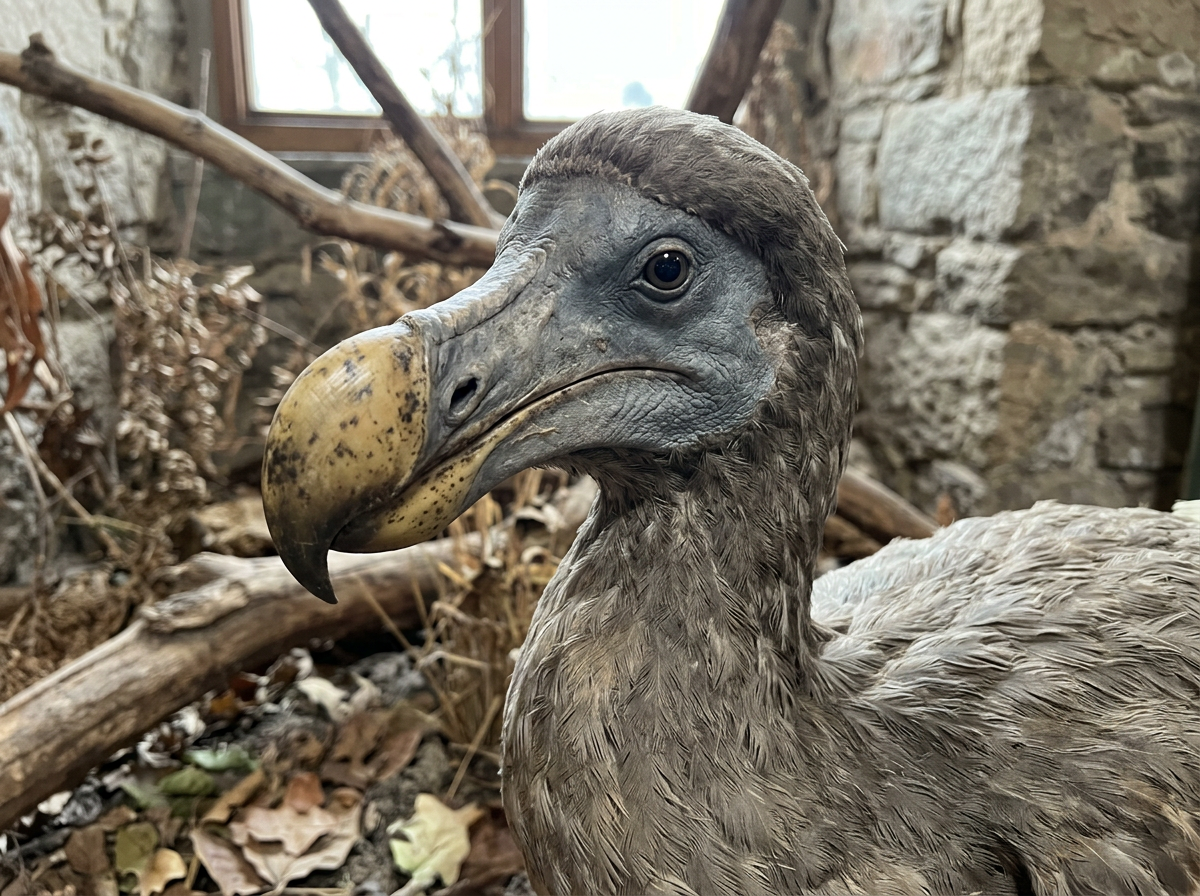
The dodo's head was relatively small for its body, with a bare, unfeathered face around the beak and eyes. The skin on that bare facial patch was likely pale or grayish. The most striking feature by far was the beak, which was long, hooked dramatically at the tip, and had a distinctive hooked shape almost like a sharp downward curve. Historical descriptions and the preserved Oxford Dodo specimen (which still has beak tissue intact) support this strongly curved, robust beak. It was not the gentle rounded bill you see on a pigeon, despite the dodo being closely related to pigeons. Think more of a large, hooked tool built for cracking open hard fruits and seeds on the forest floor.
The eyes sat in the bare-faced area and were described as being relatively small compared to the overall head. The Oxford University Museum of Natural History holds the only surviving dodo soft tissue in the world, which is the head (including beak tissue) and a foot. X-ray micro-CT scanning of this specimen has helped researchers study the beak structure and the area around the eye socket in more detail than any painting alone could provide, making it the single most important physical reference for the dodo's head appearance.
Body and proportions
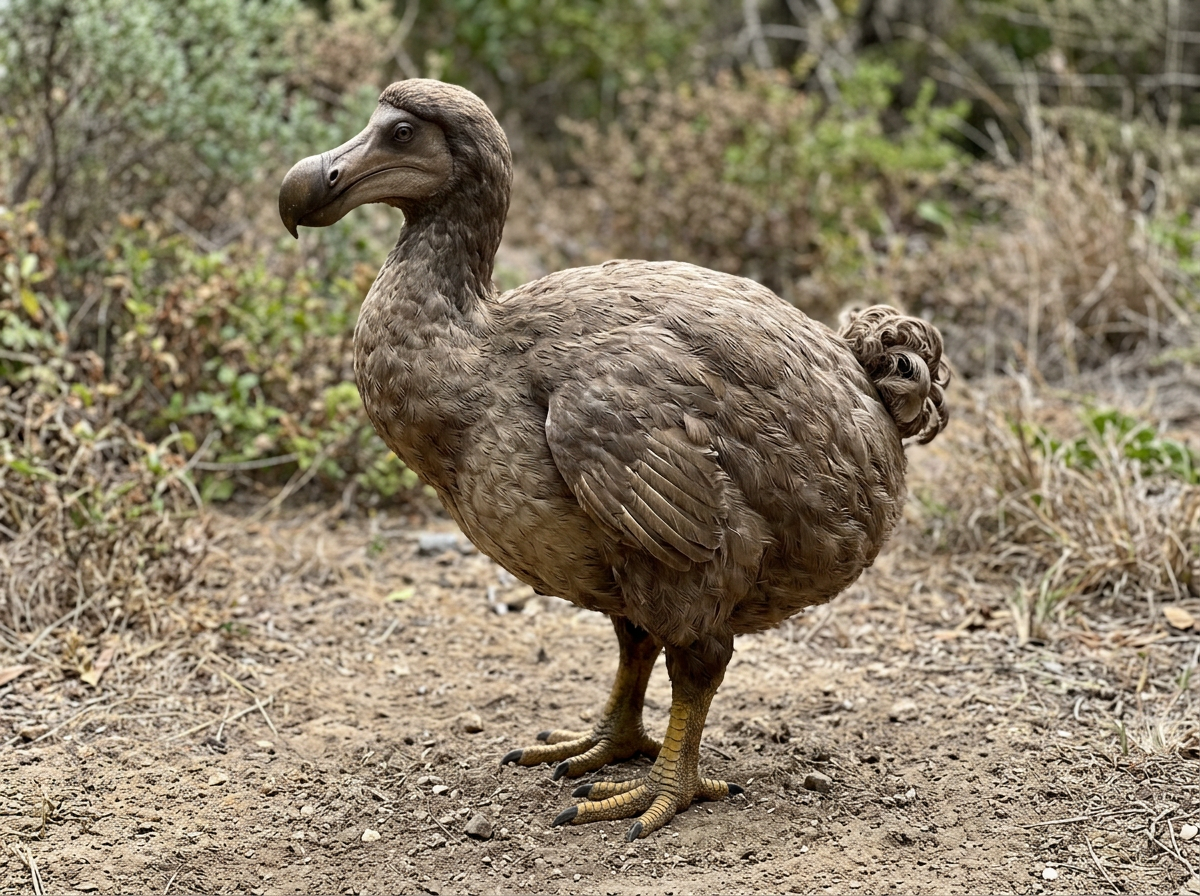
The body was deep-chested, broad, and very rounded when viewed from the side. Early historical illustrations, particularly the well-known paintings by Roelant Savery and his nephew Jan Savery, show an extremely fat, almost absurdly rotund bird. Researchers now think these portrayals likely exaggerated the bulk because the Saverys and other artists were probably drawing captive dodos that had been overfed, or were working from second-hand accounts. Wild dodos were probably still very heavy-bodied, but not quite as grotesquely pear-shaped as some of those paintings suggest. Think more barrel-shaped than balloon-shaped.
Legs and feet
The dodo's legs were thick and sturdy, which makes sense for a bird carrying that much weight around on the ground all day. Historical anatomical descriptions in the Memoir on the Dodo describe the lower legs and feet as yellowish in color, covered in thick, closely-set scales, giving them a reptilian, textured look. The feet had four toes: three pointing forward (the longer ones) and one shorter toe pointing backward. All the toes ended in black claws. The section between the knee and the ankle joint was described as only a few inches long, giving the dodo a relatively crouched, low-slung stance rather than the upright posture of a heron or crane.
Wings and tail
The wings were tiny, stubby, and completely incapable of flight. In historical illustrations you can sometimes spot them as small yellowish or pale feathered stubs tucked against the sides of the body. They had a few small feathers but were essentially vestigial. The tail was a tuft of curled, fluffy feathers, usually described or depicted as whitish or pale, sitting at the back of the body like a decorative pom-pom. It served no aerodynamic function whatsoever.
What the dodo really looked like in real life (vs. what you see in illustrations)
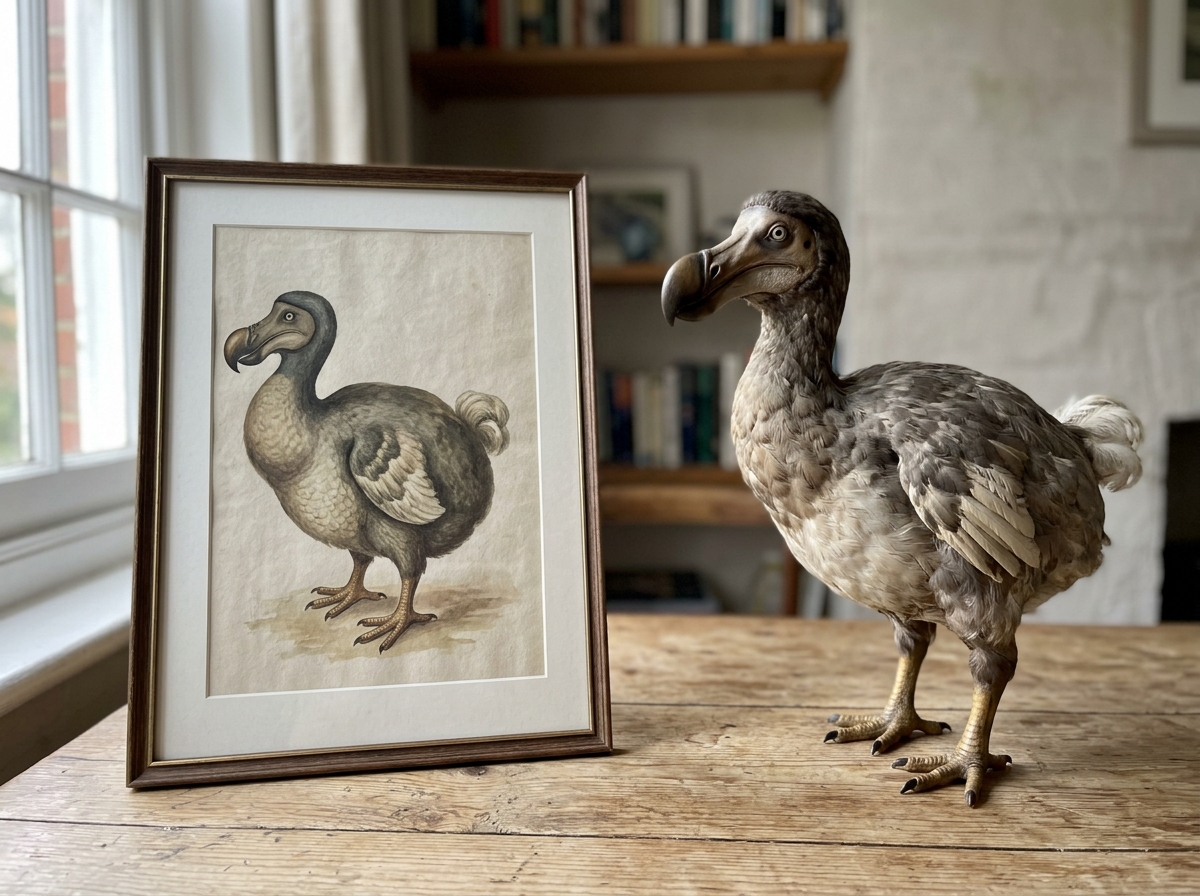
Here is the honest reality: no photograph of a living dodo exists. The last confirmed sighting was in the 1660s, roughly 200 years before photography was invented. Everything visual we have comes from three main sources: historical paintings and drawings made by European artists, written descriptions left by Dutch and Portuguese sailors and explorers, and the Oxford Dodo specimen with its preserved tissue. what does a raptor bird look like what does a raptor bird look like
The most famous images are the Savery paintings, which show a grayish, very fat bird with a prominent hooked beak and a puffball tail. These are genuinely useful reference points, but scholars have pointed out that artists working from captive or dead specimens often exaggerated features, got the feather shapes wrong, and had no reliable color reference for the bare facial skin. The color of that facial skin, for example, is still genuinely uncertain. Different depictions show it as pale gray, pinkish, or yellowish, and there is no definitive answer.
Modern reconstructions that use CT scanning data from the Oxford specimen can get closer to the real head shape and beak proportions than any painting alone. If you are looking for the most accurate visual reference available today, look for reconstructions that specifically mention using the Oxford specimen as a basis, rather than those based purely on the Savery paintings. The overall gray-brown body color, thick legs, hooked beak, and stubby wings are well-supported. The finer details of facial skin color and exact feather shading remain educated guesses.
How the dodo compares to similar-looking birds
If you come across a bird and someone tells you it looks like a dodo, here is what to look for to check the comparison. The dodo is sometimes confused with other large, ground-dwelling, heavy-bodied birds because of its general silhouette.
| Bird | Size comparison | Beak | Wings | Key difference from dodo |
|---|---|---|---|---|
| Dodo (extinct) | ~27 lbs, turkey-sized | Long, strongly hooked at tip | Tiny, vestigial stubs | Unique hooked beak + bare face + puffball tail |
| Nicobar Pigeon | ~1 lb, pigeon-sized | Short, slightly hooked | Fully functional, large | Much smaller; fully flighted; metallic green plumage |
| Weka | ~1–2 lbs, chicken-sized | Straight, pointed | Very small but present | Far smaller; brown; pointed beak; no bare face |
| Cassowary | ~130 lbs, much larger | No hooked tip; small bill | Vestigial but with spines | Much taller; blue/red bare neck; bony helmet on head |
| Kiwi | ~4–8 lbs, cat-sized | Long, straight, probing | Virtually invisible | Much smaller; nocturnal; hairlike feathers; no tail tuft |
The Nicobar Pigeon is actually the dodo's closest living relative, which surprises most people because it looks nothing like the dodo. It is a small, fully flying pigeon with iridescent green-bronze plumage. The family connection is genetic, not visual. If you are curious about birds that physically resemble ancient or prehistoric-looking species, there is a whole category of birds that get compared to dinosaurs, which makes for an interesting parallel to the dodo's reptilian-looking legs and feet.
The single clearest visual giveaway for a dodo compared to any living bird: the combination of the dramatically hooked beak, the bare pale face, the very round gray body, the complete absence of real wings, and the white puffball tail. No living bird checks all of those boxes at once.
What did a dodo egg look like?
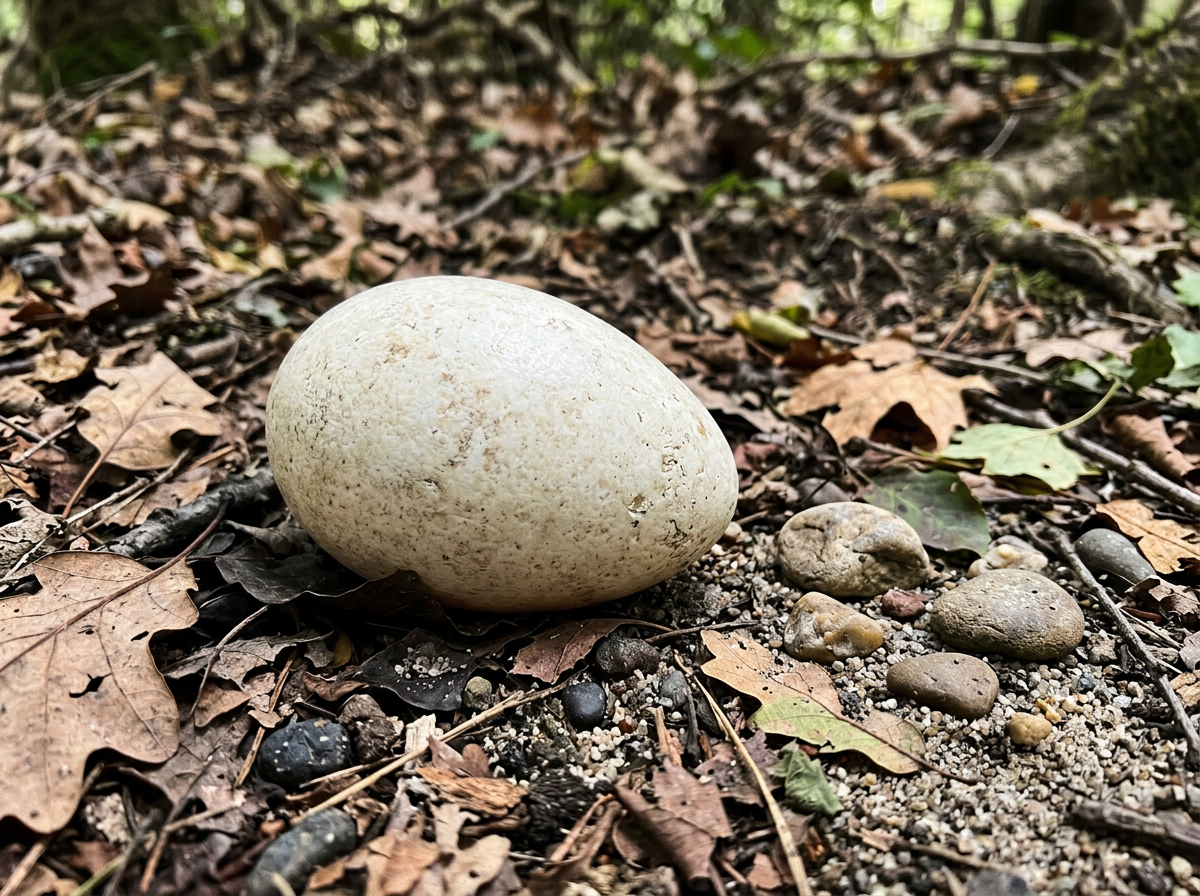
This is genuinely one of the harder questions to answer because no confirmed dodo egg survives today. What we have are two things: historical written accounts and one alleged egg specimen of uncertain provenance.
The most commonly cited historical description comes from François Cauche's 1651 account, which describes the dodo laying a single egg at a time. Cauche described the egg as white and compared its size to a half-penny roll, which gives you a sense of scale (roughly a small bread roll). That would make it a substantial egg, consistent with what you would expect from a bird of the dodo's size. However, researchers have noted that some details in Cauche's account are inconsistent with other dodo records, so his egg description is treated as useful but not fully reliable.
The one alleged physical egg specimen described in later critical discussions is reported as roughly 11 to 13 cm long (about 4 to 5 inches), cream or light cream in color, and shaped somewhat like a large pigeon's egg, with blunt, rounded ends rather than the more pointed profile you see in some other bird species. Given the dodo's close relationship to pigeons, a pigeon-like egg shape actually makes biological sense. However, the provenance of this specimen is uncertain, and it has not been definitively confirmed as a dodo egg.
So if you are trying to picture a dodo egg: think of a large, cream-white, gently oval egg with rounded ends, roughly the size of a large lemon or a small orange, laid alone in a simple ground nest. That is the best picture historical evidence can give us. There is no surviving confirmed eggshell to examine directly, so any more specific detail than that would be speculation.
Where to find the best dodo visual references
If you want to build the clearest mental image of the dodo, start with the Oxford University Museum of Natural History's coverage of their Oxford Dodo specimen, which is the only surviving soft tissue in the world and the basis for the most scientifically grounded modern reconstructions. The Savery paintings (searchable in major museum databases including the Crocker Art Museum) are worth looking at as historical reference points, just keep in mind the caveats about possible exaggeration of bulk and artistic interpretation of color.
For context on how the dodo fits into the broader world of unusual-looking birds, it is worth exploring how other extinct or primitive-looking species get described visually. The question of what the very first birds looked like, or which living birds most resemble dinosaurs, connects naturally to the dodo because of those thick, scaly, reptilian-looking legs and its overall prehistoric silhouette. the question of what the very first birds looked like The dodo was not a dinosaur, but it is easy to see why the comparison comes up.
FAQ
How can I tell whether a dodo illustration is probably exaggerating its shape or color?
Look for signs the artist may have worked from captive birds or second-hand descriptions, such as an unusually extreme roundness (a more “balloon” body than barrel-shaped) and overly confident facial skin tones. If the image does not mention the Oxford specimen or CT-based reconstructions, treat fine details like exact feather shading and the bare face color as uncertain.
What did the dodo’s beak likely do day to day, and was it really “pigeon-like”?
Despite being closely related to pigeons, the dodo’s beak was long and strongly hooked, and it likely functioned more like a heavy tool for cracking hard seeds and fruits on the ground. Pigeon bills are generally more rounded or less dramatically hooked, so if an artwork shows a soft, pigeon-style curve, it is probably not capturing the dodo accurately.
Did the dodo have any usable flight ability at all?
No. Its wings were vestigial stubs, so even if you see small feathers tucked near the sides in an illustration, they would not have produced flight or even serious gliding. The bird’s body plan was built for heavy ground movement, not aerial maneuvering.
Why does the dodo sometimes look “fatter” in paintings than in reconstructions?
Researchers suspect some paintings exaggerated body bulk because the artists were often drawing captive dodos that may have been overfed, or relying on accounts from people who did not have consistent viewing conditions. Modern reconstructions generally aim to correct that by anchoring head and beak proportions to the Oxford tissue specimen.
What is the most uncertain part of the dodo’s appearance?
Facial skin color and fine feather-by-feather shading are still the weakest points. Different historical depictions show the bare face as pale gray, pinkish, or yellowish, and there is not a single definitive, agreed-upon color for that patch.
Are there any living birds that look like a dodo in the way it looks from a distance?
A distant silhouette comparison can mislead people because several large, ground-dwelling birds are bulky. The best practical check is the full combination of traits, not one feature: dramatically hooked beak, bare face, very round body, vestigial wings, and the pale curled “puffball” tail. Most living birds will miss at least one of those key markers.
What about a dodo’s feet, did it stand low or upright?
Descriptions indicate thick, closely set scales on the lower legs and a relatively short lower-leg segment between knee and ankle, which implies a crouched, low-slung stance rather than the tall, upright posture you see in herons or cranes.
Can we be confident about dodo eggshell details like color and shape?
We can only be fairly confident at a broad level, like egg size and a generally cream to white tone, but anything more specific is shaky. One widely repeated account gives an egg color and small size comparison, yet later researchers note inconsistencies, and the only reported physical egg is of uncertain provenance and not confirmed.
If I want the best “mental picture” of a dodo, what should I prioritize?
Prioritize the head and overall silhouette, especially the strongly hooked beak, the bare face patch, stubby wings that do not contribute to flight, and the distinctive whitish curled tail. Use reconstructions that explicitly base the head on the Oxford specimen, and treat the exact facial skin color as a guess.
Next Article
What Does a Raven Bird Look Like? Key Field Marks
Learn what ravens look like: size, black plumage, thick beak, wedge-shaped tail, and how to spot look-alikes.