Raptors are some of the most dramatic birds you can spot in the wild, and once you know what to look for, they are surprisingly easy to pick out from everything else flying overhead. The short answer: a raptor bird has a hooked beak, powerful curved talons, a broad or angular silhouette, and a piercing, forward-facing gaze that nothing else in the sky quite matches. Whether you just saw something large circling above a field or a small sharp-winged bird dive past your window, this guide will walk you through every visual clue you need to confirm what you saw.
What Does a Raptor Bird Look Like? Field ID Guide

Marcus Whitley
22 Mar 2026
What actually counts as a raptor bird
The word "raptor" gets used loosely, so it helps to know the real boundaries. A raptor is a bird that hunts other animals for food, and the term most commonly applies to diurnal (daytime-active) birds of prey: hawks, eagles, falcons, kites, ospreys, harriers, and vultures. Owls are also widely considered raptors, but they hunt at night and look quite different, so they deserve their own section. The families you will most often encounter are Accipitridae (hawks, eagles, kites, and harriers) and Falconidae (falcons and kestrels).
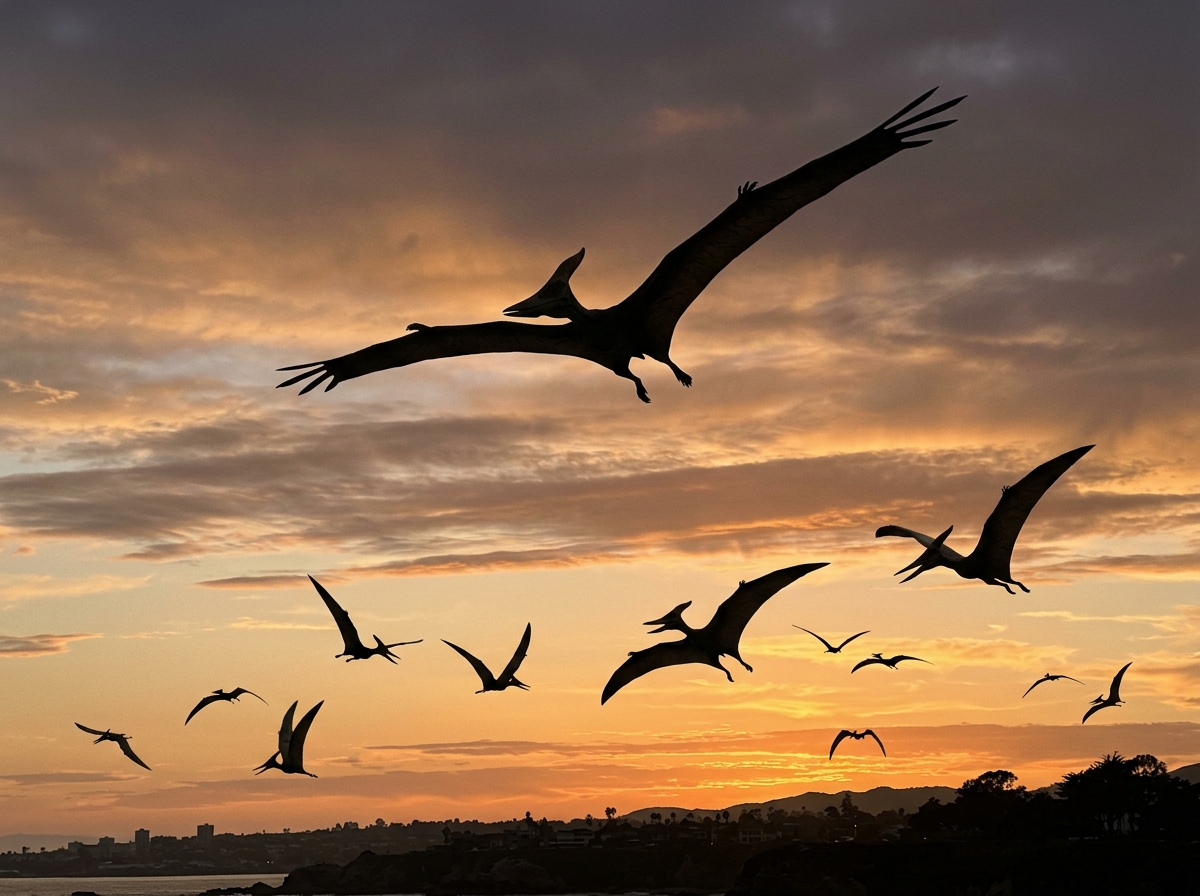
What about vultures? Technically they qualify as raptors by the predatory-bird definition, but they are scavengers rather than active hunters, and their talons are much flatter and less curved than those of a hawk or eagle, so if you’re wondering what did the first bird look like, this guide can help you learn to recognize the key features birds share. They still share the hooked beak, though. The important takeaway is that if a bird has a strongly hooked beak AND sharp, gripping talons, you are almost certainly looking at [a what bird looks like a dragon](/red-and-distinctive-birds/what-bird-looks-like-a-dragon). If it only has one of those, you might be looking at a crow, a shrike, or another bird that can seem raptor-like but is not.. If it only has one of those, you might be looking at a crow, a shrike, or another bird that can seem raptor-like but is not. what bird looks like a pterodactyl. did t rex look like a bird
The quick field marks that say "raptor" at a glance
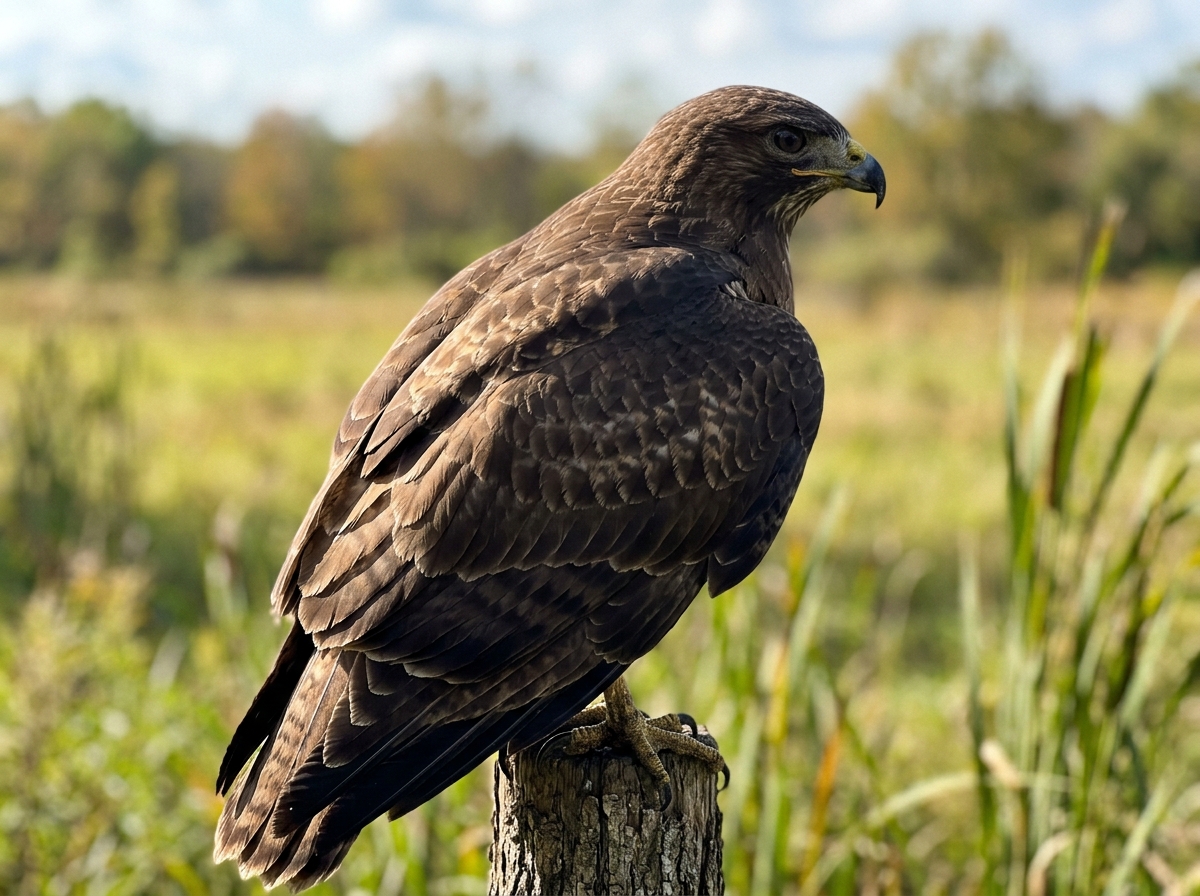
You do not always get a close look, so it is worth knowing the handful of features that jump out even at distance. These are the things experienced birders scan for first:
- A strongly hooked beak tip, visible even in a quick look or photo
- A large, rounded head that looks slightly too big for the body
- Broad, long wings that hold steady during a glide without constant flapping
- A relatively short neck (the head barely seems to stick out from the body in flight)
- Powerful-looking legs and feet, often visible when the bird is perched
- An upright, alert posture when perched, like the bird is always scanning for something
- Intense, forward-facing eyes set into a flat or slightly dished facial area
If you see most of those together, you are looking at a raptor. No single feature is definitive on its own, but the combination is very hard to fake.
Body shape and silhouette: what to look at from a distance
Head shape
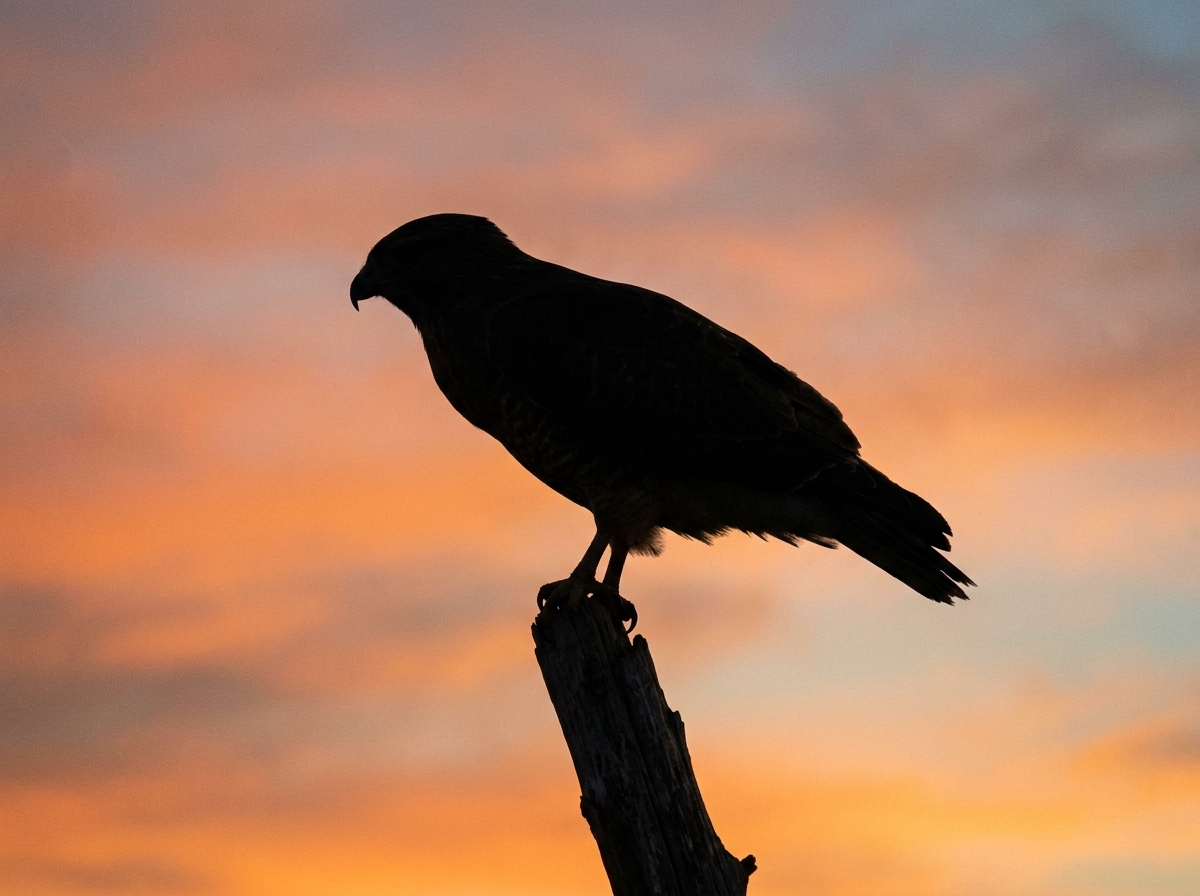
Most raptors have a proportionally large, rounded head compared to other birds of similar body size. Hawks and eagles especially look almost "blockheaded" in silhouette. Owls take this to the extreme, with enormous rounded or heart-shaped heads relative to their bodies. Falcons have a slightly smaller, rounder head that often shows a dark "helmet" pattern of color on the crown and cheeks.
Wing shape
This is probably the single most useful silhouette clue. Broad-winged raptors like hawks and eagles have wide, paddle-shaped wings with slightly splayed, finger-like primary feathers at the tips. Falcons, on the other hand, have long, pointed, swept-back wings that look almost like a crescent or anchor shape in flight. If you see broad and rounded, think hawk or eagle. If you see narrow, long, and pointed, think falcon.
Tail shape
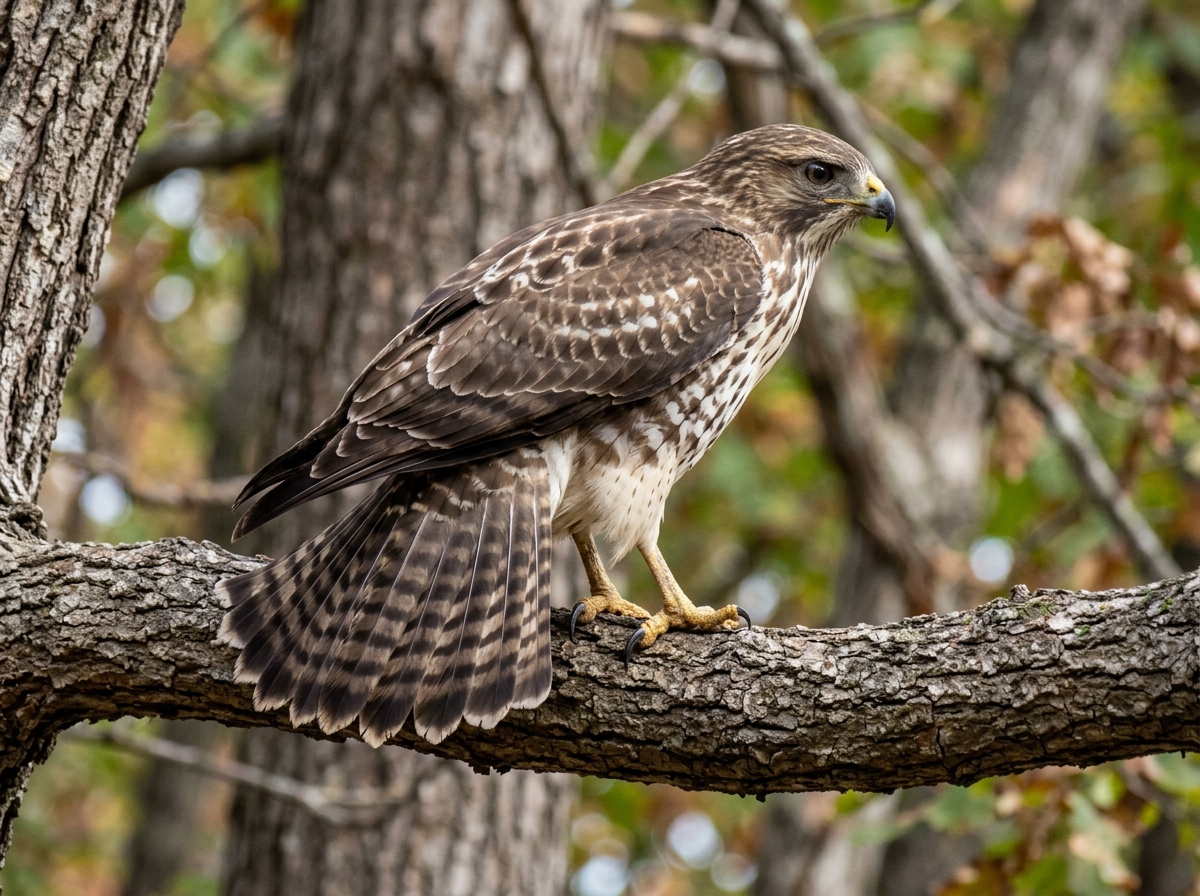
Tail shape helps narrow things down further. Broad-tailed hawks tend to have a fan-shaped, rounded, or slightly squared tail. Red-tailed hawks, one of the most common raptors in North America, show a short, broad, rufous-orange tail that is almost unmistakable once you have seen it. Accipiters (sharp-shinned and Cooper's hawks) have longer, rectangular tails. Falcons have relatively long, narrow tails. Eagles generally have long, wide tails that help them soar efficiently.
Stance when perched
A perched raptor sits very upright, almost like it is standing at attention. The body is usually vertical, with the tail pointed straight down and the head held high. This is noticeably different from, say, a crow or a heron, which tend to sit in a more horizontal, hunched posture. The raptor's large feet and thick legs are often visible below the body, gripping the branch or post firmly.
Beak, talons, and the anatomy clues you can see in photos
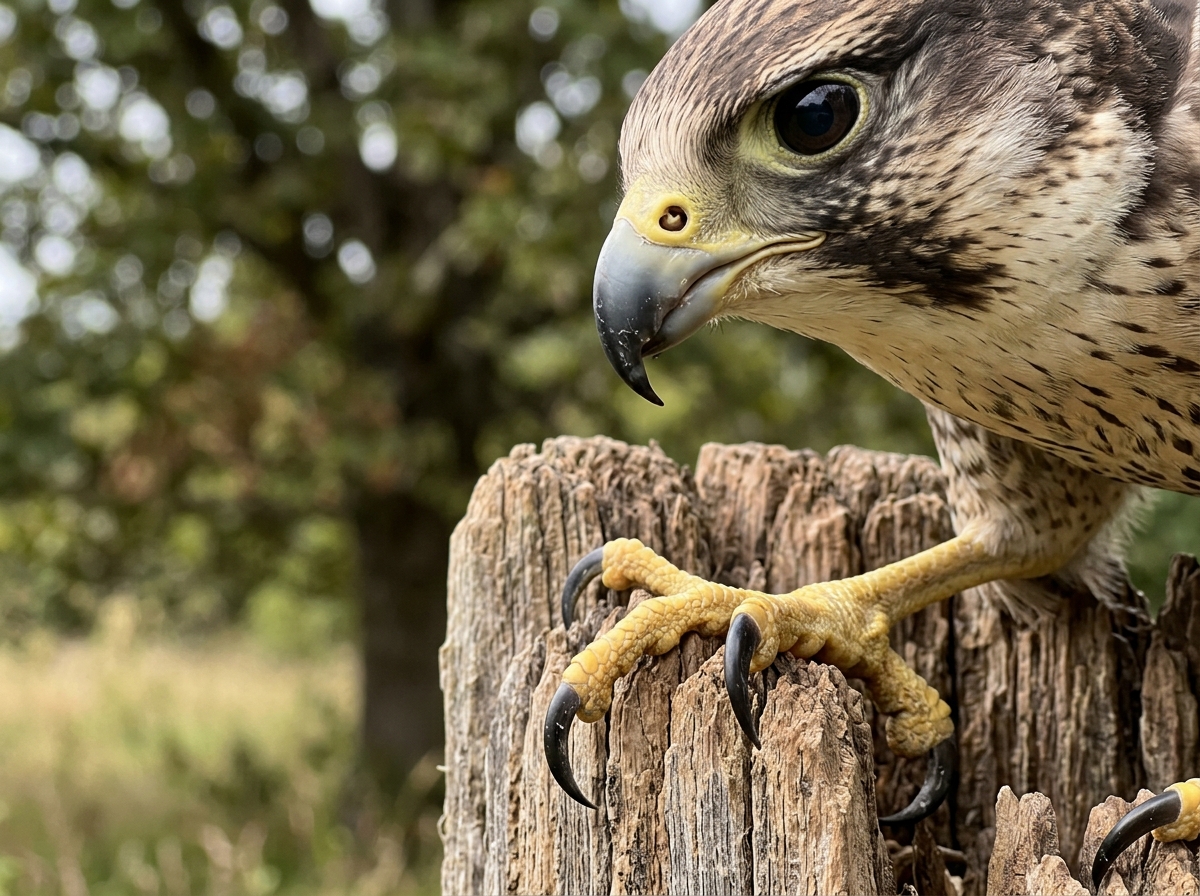
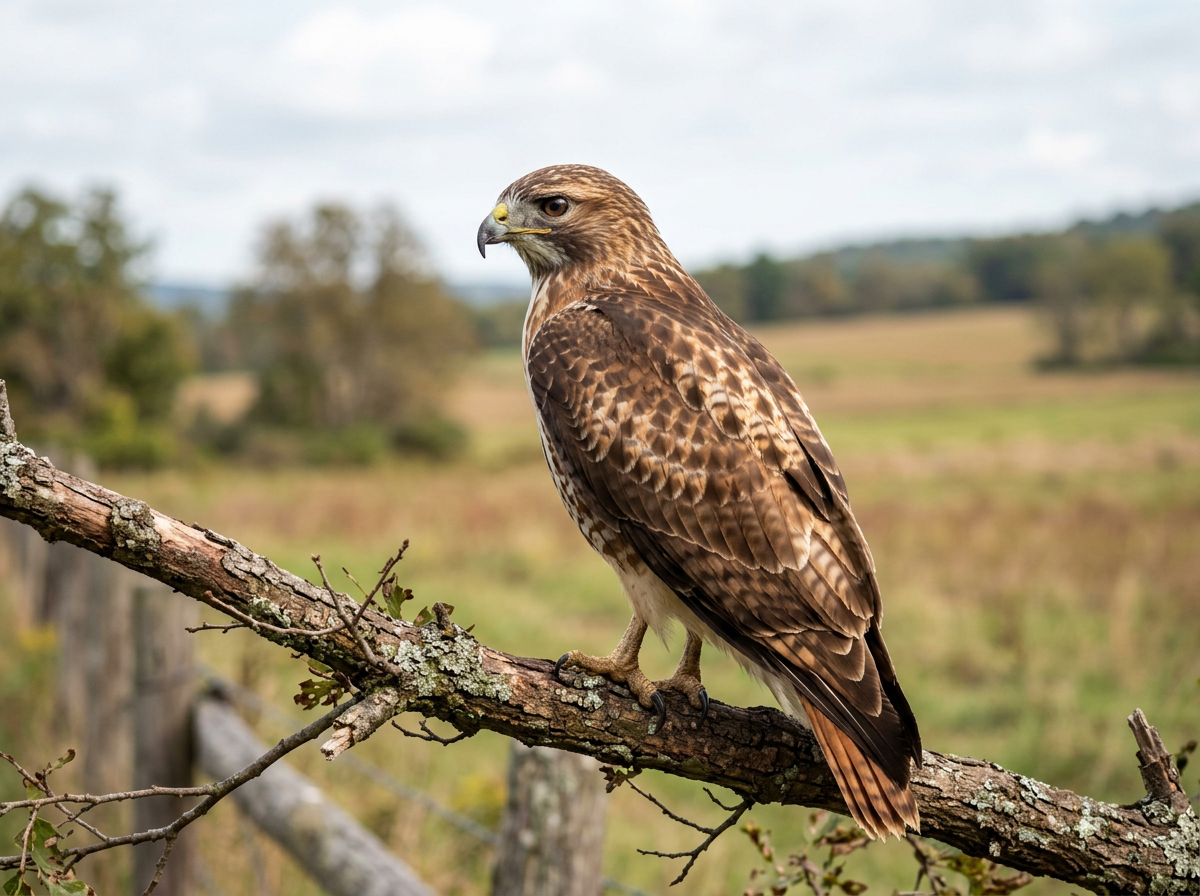
The beak is your clearest close-up identifier. Every raptor has a hook-tipped beak, meaning the upper mandible curves downward sharply at the tip, almost like a bent finger. This is not a subtle curve, it is a pronounced, hard hook. The base of the beak is often covered by a fleshy, brightly colored patch called the cere, which ranges from yellow in many hawks and eagles to bright orange-yellow in some falcons. If you get a photo and can see this hooked tip, you are looking at a raptor or a parrot (and those two are easy to tell apart by everything else about them).
Talons are the other smoking gun, but you usually only see them clearly when the bird is in flight carrying prey or when it is perched and you get a low angle. Raptor talons are long, deeply curved, and sharp, almost like cat claws scaled up dramatically. A Cooper's hawk talon or a red-tailed hawk talon looks nothing like the small, straight toes of a songbird. Eagles have talons that can measure several inches in length. Even small raptors like kestrels have noticeably hooked, gripping toes compared to other small birds.
One more face feature worth noting: raptors have large, forward-facing eyes that give them a stern, focused expression. Many hawks also show a bony ridge above the eye (the supraorbital ridge) that gives them a perpetually serious or even angry look, like they are squinting. This is a useful photo clue and quite different from the round, gentle eyes of a dove or the side-set eyes of most songbirds. If you want to read more about how different bird faces compare, checking out what a dove bird looks like can make the contrast really obvious.
How raptors look in flight
Watching how a bird moves through the air is often the fastest way to confirm you are looking at a raptor. Most hawks and eagles soar on flat or nearly flat wings for long stretches without flapping, using rising columns of warm air called thermals. During this soaring, many hawk-type raptors tilt their wingtips slightly upward, forming a shallow V-shape called a dihedral. Turkey vultures are a classic example, holding their wings in a very pronounced V and rocking slightly from side to side as they glide. Red-tailed hawks soar with wings held flatter.
Falcons fly very differently. They are built for speed, and their wingbeats are fast, stiff, and shallow. They do not soar as lazily as hawks. Instead, they often alternate rapid flaps with short glides, or they go into a spectacular steep dive (called a stoop) when hunting. A peregrine falcon in a full stoop can exceed 200 mph, and even watching one pull up from a dive is visually striking compared to the relaxed circles of a buteo hawk overhead.
Accipiters (like the Cooper's hawk or sharp-shinned hawk) have a distinctive flap-flap-flap-glide rhythm, with quick wingbeats followed by a short glide. You might notice this "flap-flap-flap-sail" pattern in a wooded area where these birds hunt songbirds through trees. Ospreys often hover over water before diving feet-first, which is unlike any other raptor behavior and makes them relatively easy to identify even from a distance.
The main raptor groups and what each one looks like
| Raptor Group | Wing Shape | Tail Shape | Typical Size | Distinctive Look |
|---|---|---|---|---|
| Buteo Hawks (Red-tailed, Red-shouldered) | Broad, rounded, finger-tipped | Short, fan-shaped | Medium to large (crow-sized to larger) | Chunky body, broad wings, often banded tail |
| Accipiter Hawks (Cooper's, Sharp-shinned) | Shorter, rounded wings | Long, rectangular | Small to medium | Long tail, rounded wings, fast flap-glide flight |
| Eagles (Bald, Golden) | Very broad, long, finger-tipped | Long, wide | Very large (wingspan up to 7-8 ft) | Massive size, broad "plank" wings, large head |
| Falcons (Peregrine, Kestrel, Merlin) | Long, narrow, pointed | Medium, tapered | Small to medium | Anchor-shaped in flight, dark "mustache" marks on face |
| Ospreys | Narrow with kinked "M" bend | Medium | Large | White underparts, dark wrist patches, hovers over water |
| Harriers (Northern Harrier) | Long, narrow | Long | Medium | Low, buoyant flight over fields, white rump patch |
| Owls (Great Horned, Barn, Barred) | Broad, rounded, silent | Short to medium | Small to very large | Enormous round head, flat face, nocturnal, silent flight |
Hawks and eagles up close
The red-tailed hawk is probably the raptor most people in North America have seen without realizing it, sitting on a highway light pole or fence post. It has a chunky, barrel-chested body, a pale belly often with a dark "belly band" of streaks, and that distinctive brick-red tail visible from above. Bald eagles are hard to mistake once adults, with their white head and white tail contrasting sharply against a dark brown body, though juveniles are all dark brown and much trickier. Golden eagles look similar to juvenile bald eagles but show a golden-washed nape and tend to be sleeker. Both eagle species have enormous wingspans, with bald eagles reaching 6 to 8 feet across.
Falcons up close
Falcons are built lean and fast. The peregrine falcon, one of the most widespread raptors in the world, has a blue-gray back, a white-to-pale-buff chest with dark barring, and a distinctive dark "helmet" with a thick black mustache stripe dropping below the eye. This mustache mark is a hallmark of falcons generally. The American kestrel, North America's smallest falcon, is the size of a robin and is brightly colored: rusty orange-red back and tail on both sexes, with the male showing blue-gray wings. You might spot kestrels hovering in place over roadsides, something few other raptors do as regularly.
Owls up close
Owls look like raptors, and they are raptors, but their appearance is distinctive enough that most people do not confuse them with hawks once they get a look. The defining visual features are the enormous, forward-facing eyes set into a flat facial disk, the very large rounded head (sometimes with feathered "ear" tufts that are not ears at all), and an incredibly soft, fluffy plumage that enables near-silent flight. Great horned owls are the classic example: large, mottled brown body, prominent ear tufts, bright yellow eyes, and a white throat patch. Barn owls have a heart-shaped white facial disk that is unlike anything else in the bird world.
Confirming the ID: look-alikes and the details that separate them
A few birds regularly get mistaken for raptors, and some raptors get confused with each other. Here are the most common mix-ups and how to sort them out.
Crows and ravens vs. raptors
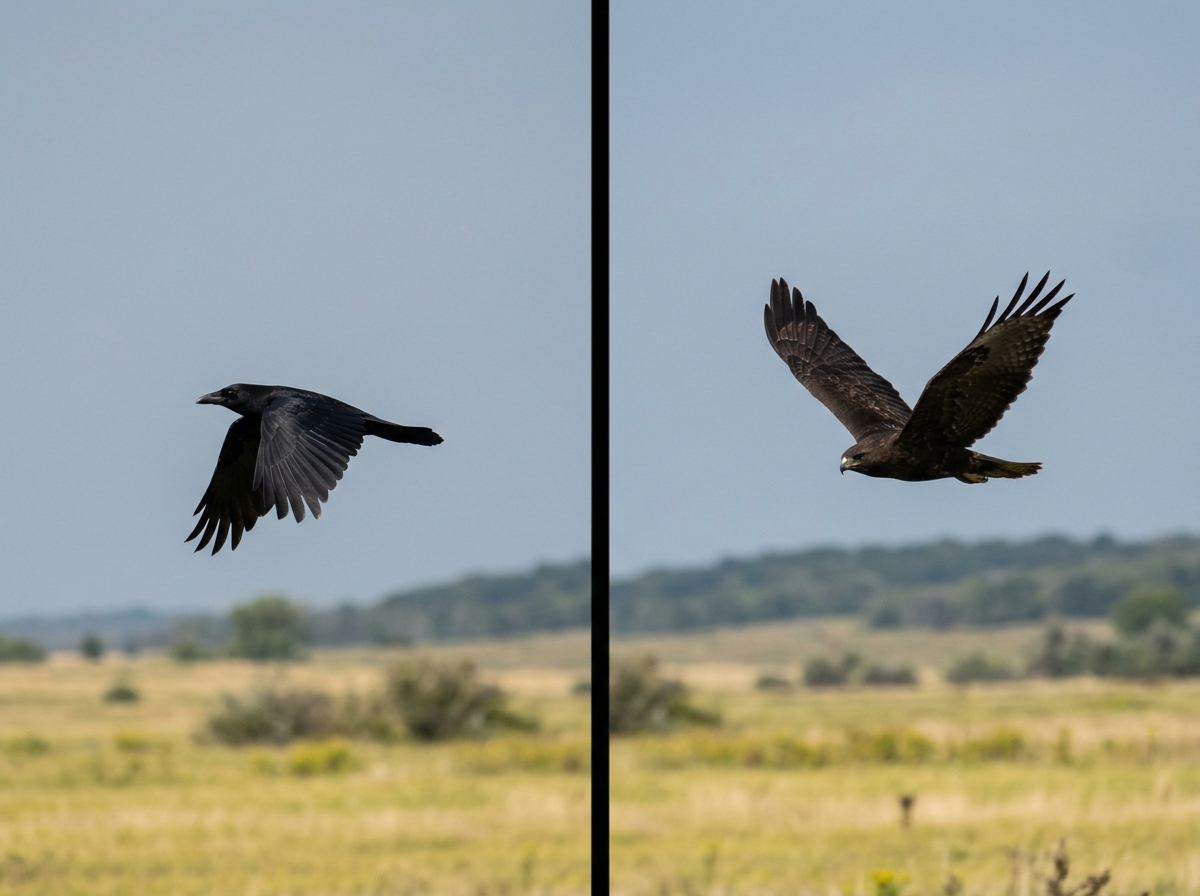
In the air, a large crow or raven can briefly look like a hawk or falcon. The key differences: crows and ravens flap more constantly, have a flat wing profile with no dihedral, and have straight (not hooked) beaks. Ravens especially are large and can soar, but the all-black plumage and wedge-shaped tail separate them easily. If you are curious about what ravens look like in detail, that comparison is worth a separate read.
Sharp-shinned hawk vs. Cooper's hawk
These two accipiters look almost identical. The best field marks: Cooper's hawk is larger (closer to a crow in size), has a more rounded tail tip, and tends to have a more distinctly capped look to the head. Sharp-shinned hawks are smaller (closer to a jay), with a squared or notched tail tip. In flight, Cooper's tend to have the head projecting noticeably in front of the wings, while the sharp-shinned's head barely clears the wrist of the wing.
Turkey vultures vs. eagles and hawks
Turkey vultures soar with wings held in a strong V (dihedral), rock or teeter side to side, and have small, naked red heads that look tiny relative to the body. From below, their wings show a two-tone pattern: dark front half, silvery-gray back half. Eagles soar with flat wings and have large, prominent heads. Any time you see that teetering, V-winged soarer with a small bare head, it is a turkey vulture, not an eagle.
Juvenile bald eagles vs. golden eagles
Both are massive and dark brown in their early years. Look for the golden eagle's golden-buff wash on the back of the head and neck, and a whitish base to the tail in younger birds. Juvenile bald eagles tend to show white mottling scattered through the wing linings and body, and they often have a white belly patch. The pattern of white in the wing linings is the most reliable separator in the field.
What to do right now to identify what you saw
If you are trying to identify a raptor you just saw or photographed, here is exactly what to focus on, in order of usefulness:
- Note the size immediately. Compare it mentally to a familiar bird: was it sparrow-sized, crow-sized, or larger than a crow? Size narrows the group dramatically.
- Look at or photograph the wing shape. Broad and rounded means hawk or eagle. Long and pointed means falcon. Broad but kinked into an M-shape means osprey.
- Check the tail. Short and fanned suggests a buteo hawk. Long and rectangular suggests an accipiter. Long and narrow with a point suggests a falcon.
- If perched, get a photo of the face and beak. The hooked beak tip and any facial markings (eye stripes, mustache marks, facial disk for owls) are the clearest ID features in a close photo.
- Watch the flight behavior for 30 seconds. Is it soaring in circles? Flapping and gliding in a flap-flap-flap-sail pattern? Hovering in place? Diving steeply? Each behavior pattern points to a specific group.
- Photograph from multiple angles if possible: directly below showing the wing/tail pattern from underneath, from the side if perched, and from a distance showing the full silhouette.
- Note the habitat and time of day. Open fields and highway poles suggest red-tailed hawk or kestrel. Forest edges suggest accipiters. Waterways suggest osprey. Nighttime with a large round head almost certainly means owl.
The combination of size, wing shape, tail shape, and flight style will get you to the right raptor group in almost every case, even without a perfect close-up photo. Once you know the group, the specific species ID becomes much easier because you have eliminated most of the options. If you are still stuck, comparing your photos to images of specific species in each group, or posting them to a bird identification community, will usually get you an answer within minutes.
Raptors are genuinely one of the most rewarding bird groups to identify because their field marks are bold and their behavior is dramatic. Once you learn to read a silhouette and pick out that hooked beak, you will start noticing raptors everywhere you go, perched on posts, soaring over parking lots, and stooping over fields. It becomes one of those things you cannot unsee.
FAQ
What if I only saw a raptor briefly, and I cannot tell its beak or talons?
Use silhouette first, especially wing shape (broad and paddle-like versus long and pointed) and tail shape (fan or rounded versus rectangular or narrow). Then switch to flight style, for example, falcons show fast, stiff wingbeats and short glides, while many hawks and eagles soar with long, flatter wing posture.
Can a bird still be a raptor if it does not look “hooked” from my angle?
Yes, angle matters. The hooked beak is most obvious in side views, but from far away you can miss the curve. In that case, prioritize a pronounced hooked grip at the toes (if visible), overall silhouette, and the bird’s posture, especially an upright stance with the tail held down when perched.
How can I tell a vulture from a hawk if both are circling high overhead?
Look for the combination of a strong V-wing gliding posture (more pronounced than most hawks), rocking or teetering side to side, and a small, bare red head that looks tiny relative to the body. Many hawks circle more smoothly without that distinctive teetering V.
Are parrots sometimes mistaken for raptors because of the beak?
It can happen only when someone gets a close view of a curved beak and assumes “hooked” equals raptor. A raptor should also show the rest of the raptor package (broad or angular silhouette, gripping talons, and raptor-like flight or upright perch posture). Parrots usually have different body shape and wing posture, and they rarely show deep, sharply curved predatory talons.
What is the fastest way to separate a falcon from a hawk when both are flying?
Check wingbeat and dive behavior. Falcons have fast, stiff, shallow wingbeats and often alternate with short glides, and they may stoop steeply when hunting. Hawks more commonly use longer soaring bouts on thermals with flatter, broader wings.
How do I identify an accipiter (sharp-shinned versus Cooper’s) without perfect photos?
Go for size and head position. Cooper’s hawks are larger and often show a more distinctly capped head, and in flight the head tends to project more in front of the wings. Sharp-shinned hawks are smaller and have a more squared or notched tail tip, with the head barely clearing the wrist area.
What should I do if my photo is blurry but the bird’s tail looks unusual?
Tail shape often survives motion blur better than small facial details. Try to capture overall tail form and outline, such as fan or squared versus long and narrow. Then cross-check with wing silhouette, because tail alone can be misleading between species with similar color phases.
Do juveniles and different color morphs make raptors hard to identify?
Yes. Juvenile eagles can lack the adult head and tail contrast, and different morphs can change tail and chest coloration. In those cases, rely more on stable field marks like wing lining patterns, head shape in silhouette, tail outline, and flight style rather than just color.
How can I tell an owl from a daytime-looking “hawk-shaped” bird?
Owl traits are structural and consistent: a very large, forward-facing eye area inside a facial disk, plus a broad rounded head and soft, fluffy-looking plumage that can make flight appear unusually quiet and smooth. In most cases, the facial disk shape is the quickest separator.
If I think I saw a peregrine or kestrel, what single clue is most helpful?
For peregrine falcons, focus on the dark “helmet” with the thick black mustache stripe below the eye. For kestrels, size and hovering behavior are big hints, kestrels are small (about robin-sized) and often hover in place over roadsides.
What are common mistakes people make when identifying raptors?
Common errors include relying only on color (which changes with age and lighting), assuming any bird with a hooked beak is a raptor, and confusing soaring patterns (for example, turkey vulture V-wing teetering versus eagle circles). Always use a combination approach: silhouette, wing shape, tail shape, and flight behavior in that order.
How should I document a raptor sighting to make identification easier?
Note the habitat (open field, woodland edge, near water), time of day, approximate size relative to nearby objects, and flight behavior (soaring, flap-glide, hovering, or diving). If possible, capture at least one wide shot for silhouette plus one closer frame for beak or head pattern, then compare across raptor groups.
Next Article
What Bird Looks Like a Pterodactyl? Identify the Match
Learn the visual traits of a pterodactyl-like bird and use a step-by-step match to identify similar raptors and soarers.